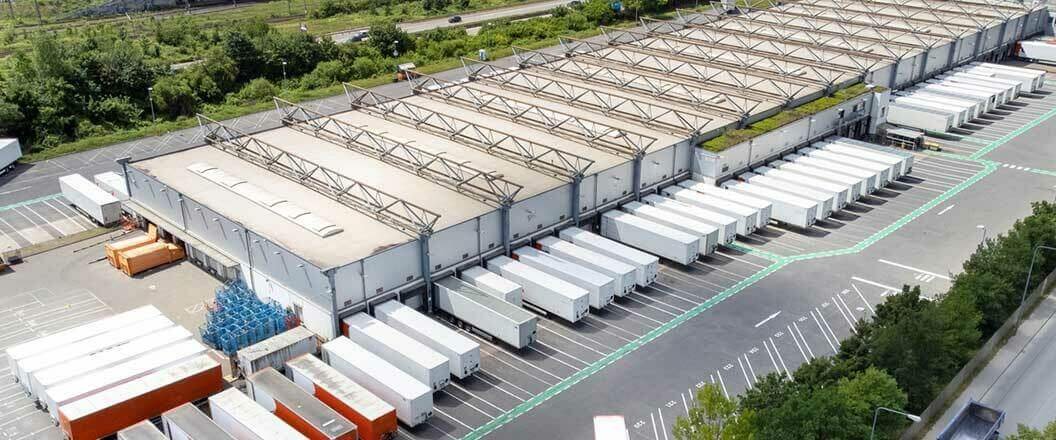
Last-Mile Delivery Optimization Embraces AI for Smarter Deliveries
The silent engine of modern commerce, Last-Mile Delivery (LMD), is undergoing a profound transformation. What was once the most costly and complex leg of the supply chain — moving a package from a central hub to your doorstep — is now at the forefront of innovation. The race for speed, flexibility, and sustainability has ignited a revolution in Last-Mile Delivery Optimization, with Artificial Intelligence leading the charge for smarter, more efficient deliveries.
At a Glance: What You'll Learn About Last-Mile Delivery Optimization
- LMD is the bottleneck: It’s the final leg, costing over 50% of total shipping expenses and often the most inefficient.
- AI is central: Machine learning and predictive analytics are key to dynamic routing, demand forecasting, and real-time problem-solving.
- Humans still matter: Driver experience complements algorithms, and courier satisfaction is vital.
- Automation is growing: Drones and delivery robots are becoming viable for specific use cases, reducing human intervention.
- Connectivity is crucial: IoT provides real-time tracking and data for smart decision-making, from parcels to smart lockers.
- Hybrid models are the future: Combining technologies (e.g., truck-drone) and strategies (e.g., crowdsourcing, multimodal delivery) offers the best balance of efficiency and sustainability.
- Challenges remain: Regulatory hurdles, high upfront costs, and infrastructure gaps still need to be addressed through collaboration.
The Unsung Hero's Hurdle: Why Last-Mile Matters Most
Imagine ordering something online and having it arrive within hours, even minutes. This expectation is now a benchmark, not a luxury. Last-mile delivery, the final sprint from a distribution center to the customer's front door, is where this promise is either fulfilled or broken. It’s the face of your brand, the moment of truth for customer satisfaction. But it's also where the rubber meets the road, literally, incurring over half of total shipping costs and battling the unpredictable chaos of urban environments. Optimizing this crucial stage isn't just about cutting costs; it's about building resilience, enhancing customer loyalty, and carving out a sustainable future for logistics.
The Quadruple Threat: Core Challenges in Last-Mile Delivery
Before we dive into solutions, let's understand the formidable obstacles facing last-mile logistics today:
- Efficiency & Operational Costs: Think of the maze of city streets, traffic jams, unexpected road closures, and the sheer volume of individual stops. Fuel consumption skyrockets, vehicles often run under capacity, and every delay eats into profit margins. High operating costs aren't just an inconvenience; they threaten the viability of rapid, on-demand services.
- Environmental Sustainability: With more vans crisscrossing our cities daily, carbon emissions and urban congestion are growing concerns. Customers and regulators alike are pushing for greener logistics models, making sustainability a non-negotiable part of any modern delivery strategy.
- Customer Satisfaction: Today's consumers demand speed, flexibility, and transparency. They want their package when and where they want it, often within tight delivery windows. Failed deliveries due to customer unavailability or inaccurate estimates lead to frustration, costly re-deliveries, and a damaged brand reputation.
- Resource Allocation: Dynamically matching available couriers with an ever-changing landscape of delivery tasks, especially in crowdsourced models, is a complex puzzle. Getting it wrong means wasted time, unhappy drivers, and missed delivery windows.
Beyond the Map: The Evolution of Last-Mile Delivery Optimization
The solutions to these challenges are as varied as the problems themselves, drawing from decades of research and the latest technological breakthroughs.
Algorithmic Foundations: The Math Behind the Routes
Before AI burst onto the scene, mathematicians and computer scientists laid the groundwork for route optimization.
- The Classic Puzzles: VRP & TSP
At the heart of many delivery problems lie the Vehicle Routing Problem (VRP) and the Traveling Salesman Problem (TSP). Imagine a delivery truck needing to visit multiple points and return to its starting depot. The TSP seeks the shortest possible route visiting each location exactly once, while VRP expands on this, considering multiple vehicles, capacities, and time windows. These are fundamental combinatorial optimization challenges, defining the baseline for efficiency. - Seeking Perfection: Mathematical Programming
For smaller, less dynamic scenarios, methods like Linear Programming (LP) and Mixed-Integer Programming (MIP) offer rigorous mathematical frameworks. They can achieve incredibly precise, near-optimal solutions—often 95-100% optimal. However, this precision comes at a very high computational cost, making them impractical for the real-time, large-scale decision-making needed in today's fast-moving logistics. - Smart Shortcuts: Heuristics & Metaheuristics
To tackle larger, more complex VRPs and TSPs without the astronomical computational demands of mathematical programming, algorithms like Ant Colony Optimization (ACO), Genetic Algorithms (GA), and Simulated Annealing (SA) step in. These "metaheuristics" don't guarantee the absolute best solution, but they find excellent, near-optimal answers (85-98% optimality) with moderate computational cost. They're quick enough for many practical applications, though their performance can be sensitive to how you "tune" them.
AI Takes the Wheel: Smarter, Faster, More Flexible
Artificial intelligence isn't just an upgrade; it's a paradigm shift for last-mile delivery. AI-based approaches are engineered to reduce operating expenses, elevate service quality, and provide dynamic, real-time adjustments that traditional methods simply can't match.
- Predictive Analytics: Anticipating the Road Ahead
AI models feast on data: historical traffic patterns, real-time weather, planned road closures, and even customer purchasing habits. By analyzing these vast datasets, predictive analytics can forecast demand with remarkable accuracy, identify potential bottlenecks before they occur, and even predict the likelihood of a customer being home for delivery. This enables proactive rerouting and more intelligent resource allocation. - Machine Learning & Reinforcement Learning: Adapting in Real Time
- Route Optimization: ML algorithms constantly learn and refine delivery routes. As new orders come in or unexpected delays occur, they can update routes in real-time, finding the most efficient path forward.
- Parcel Consolidation: AI helps group packages efficiently, maximizing vehicle capacity and reducing the number of trips.
- Courier Matching: Especially in crowdsourced models, ML ensures the right courier is matched with the right task, considering their location, vehicle, and experience.
- Maximizing Revenue: Beyond just efficiency, AI can help optimize pricing and delivery windows to maximize profit while maintaining service levels.
- Autonomous Decision-Making: Navigating the Unexpected
One of AI's most powerful capabilities is its ability to handle unforeseen disruptions—a sudden road closure, a missed delivery, an urgent new order—without human intervention. AI systems can rapidly assess the situation, re-optimize routes, and ensure efficient package delivery, keeping operations smooth even in chaos. - Dynamic Scheduling: Fluidity in a Fast-Paced World
The static delivery schedules of the past are obsolete. Machine learning enables real-time adjustments to delivery schedules based on fluctuating demand, traffic conditions, and available resources. This agility is crucial for services like same-day or one-hour deliveries.
Benefits of AI in LMD: AI boosts productivity, slashes operating costs, offers unparalleled real-time adaptability, enhances sustainability by optimizing routes, and significantly improves customer satisfaction.
Limitations: The power of AI relies heavily on the quality and volume of data. Poor data leads to poor decisions. Model generalizability can be an issue, and market volatility or data sparsity can undermine even the best demand forecasting.
The Human Touch (Enhanced): Experience-Based Methodologies
While AI offers unprecedented power, the local knowledge of experienced drivers remains invaluable. They know the shortcuts, the tricky parking spots, and the best times to deliver to certain neighborhoods—tacit knowledge that algorithms often miss.
- Learning from the Best: Newer methodologies leverage this human expertise. Neural networks can be trained on actual routes executed by drivers, learning their "unwritten rules" and often outperforming purely algorithmic solutions.
- Bridging the Gap: This approach provides a balance, leading to improved route acceptance rates by drivers (because the routes make intuitive sense to them) and a better fit for real-world conditions. This is particularly useful for optimizing electric vehicle fleets, where subtle factors like charging point availability and terrain impact range.
Benefits: Better real-world applicability, higher driver satisfaction and route acceptance.
Limitations: Less consistent and scalable than pure algorithmic approaches for dynamic, large-scale operations. Solution quality can vary (75-100%).
Robots and Drones: The Autonomous Frontier
The future of last-mile delivery is increasingly autonomous, promising to reduce human intervention and offer scalable, often eco-friendly, solutions.
- Unmanned Aerial Vehicles (UAVs)/Drones:
- Use Case: Ideal for rapid, eco-friendly delivery of small, lightweight packages, especially in areas where urban traffic is a major impediment.
- Innovation: Often integrated into hybrid truck-drone systems (known as Autonomous Vehicle Routing Problem with Drones, or A-VRPD), where a truck carries multiple drones and acts as a mobile launchpad, extending range and energy efficiency.
- Benefits: Faster delivery times, ability to bypass traffic, reduced congestion, and lower emissions (when electric).
- Limitations: Significant payload limitations, high dependency on weather conditions, strict regulatory restrictions on airspace, limited battery life, and high initial purchase costs.
- Autonomous Ground Vehicles (AGVs)/Delivery Robots:
- Use Case: Suited for short-distance urban deliveries, navigating heavy traffic on sidewalks or dedicated lanes. They can significantly reduce logistics costs and traffic impact.
- Innovation: Can be integrated with public transport systems, using buses or trains for longer hauls before deploying for local last-mile delivery.
- Benefits: Reduce human labor costs, alleviate traffic congestion, potentially lower emissions (especially electric models).
- Limitations: Challenges with ground obstacles, complex navigation in dynamic urban environments, weather sensitivity, and high development/purchase costs.
Environmental Impact: While traditional fuel trucks are the biggest emission culprits, electric trucks and hybrid drone-electric truck systems significantly lower CO2 footprints, aligning with sustainability goals.
The Connected Ecosystem: IoT-Enabled Solutions
The Internet of Things (IoT) brings real-time visibility and data-driven intelligence to every step of the delivery process, making operations smarter and more transparent.
- Real-time Monitoring & Tracking: GPS trackers and a network of sensors on vehicles and parcels provide an unprecedented level of transparency. This isn't just about knowing where a package is; it's about predicting potential delays, optimizing routes dynamically, and keeping customers informed every step of the way. Learn more about non-stop forwarding in a logistics chain relies heavily on such real-time visibility.
- Smart Parcel Lockers: Equipped with IoT sensors, these lockers automate parcel processing, provide secure storage, and send real-time notifications to customers. They drastically reduce missed deliveries and package theft, proving especially valuable for urban e-grocery and rural areas with limited infrastructure.
- Drone Integration with IoT: IoT sensors on drones monitor their surroundings, collect real-time data on weather and obstacles, and adjust flight patterns for optimal delivery. Systems like "DroneTalk" enable drones to communicate with smart infrastructure, and 3D4 systems can even guide drones to high-rise building windows.
- Energy & Resource Management: IoT devices continuously track vital metrics like fuel consumption, battery life for electric vehicles, and overall vehicle performance. This data helps in energy-aware computation management, optimizes charging schedules, and ensures resources are allocated efficiently.
- Blockchain Integration: Combining IoT data with blockchain technology creates highly transparent, secure, and immutable supply chain systems. This is particularly critical for high-value or sensitive goods like food and pharmaceuticals, where data integrity and traceability are paramount, reducing fraud and enabling automated smart contract payments.
Benefits of IoT: Increased transparency, lower operational costs (by reducing human error and optimizing processes), improved customer satisfaction through better communication, dynamic routing capabilities, and enhanced coordination across the entire delivery network.
Limitations: Significant cybersecurity risks associated with networked devices, high deployment costs for extensive sensor networks, and complex data privacy issues that need careful management.
Smart Strategies for Seamless Journeys
Beyond technology, clever operational strategies are reshaping how goods get delivered.
- Crowdsourcing: This model dynamically assigns delivery tasks to independent drivers using their own vehicles. Think of it like ride-sharing for packages.
- Benefits: Offers incredible operational flexibility, allowing businesses to quickly scale to meet fluctuating demand without investing in a dedicated fleet. It reduces the need for more company-owned vehicles, utilizing existing networks (like gig economy drivers or even integrating with public transport), thereby minimizing emissions and traffic.
- Multimodal Delivery: This approach combines different transport modes—trucks, bikes, drones, public transport—to leverage the unique advantages of each.
- Benefits: Faster, less costly parcel delivery by optimizing for varied environments (e.g., trucks for long hauls, then drones or electric tricycles for dense urban areas). It provides greater flexibility in managing delivery volumes and scaling operations.
- Courier-Centric Approaches:
- Focus: Acknowledging that courier satisfaction is directly linked to service quality and operational efficiency.
- Strategies: This includes dynamically assigning couriers to compact, geographically defined territories, or balancing courier well-being with customer satisfaction by offering variable delivery time slots. Prioritizing driver experience through optimized routes not only reduces churn but also boosts overall delivery performance.
Peeking Into Tomorrow: Emerging Technologies Shaping LMD
The innovation pipeline for last-mile delivery is far from dry. Several technologies are poised to make an even bigger impact in the coming years.
- Blockchain Technology: Beyond its current role in traceability with IoT, blockchain is set to provide even more secure, transparent, and immutable digital ledgers for all supply chain transactions. This will reduce fraud, streamline customs, and enable automated payments via smart contracts, making the entire logistics chain more trustworthy and efficient.
- Virtual Reality (VR) and Augmented Reality (AR): These immersive technologies are expected to optimize warehouse operations by providing visual picking instructions or enhancing delivery precision by overlaying navigation data onto a driver's view. Imagine a driver wearing AR glasses that highlight the exact delivery spot or provide instructions for secure package placement.
- Advanced AI and Automation: We're just scratching the surface of what self-driving vehicles (both drones and ground robots) can achieve. Further advancements will unlock scalable, cost-effective solutions for urban and rural logistics, moving towards fully autonomous delivery networks.
Navigating the Roadblocks: Challenges and Your Next Steps
While the technological promise is immense, significant barriers still stand in the way of widespread adoption. Understanding these helps businesses and policymakers chart a realistic course forward.
Key Barriers to Widespread Adoption
- Regulatory Issues: Imagine a sky full of delivery drones. Who manages the airspace? What are the privacy implications? Labor legislation for autonomous vehicles is also evolving, creating a complex legal landscape that slows down widespread integration.
- Financial Constraints: The upfront costs for acquiring and maintaining advanced technologies—UAVs, sophisticated robots, and powerful AI systems—are substantial. This poses a significant hurdle, especially for smaller businesses or those with tighter margins.
- Infrastructural Limitations: The dream of an all-electric delivery fleet requires a robust network of charging infrastructure. Similarly, effective deployment of autonomous systems in remote areas needs reliable telecommunication networks. These infrastructural gaps limit large-scale integration and widespread accessibility.
Charting Your Course: Actionable Insights for Optimization
Overcoming these challenges and harnessing the power of next-gen last-mile delivery optimization requires strategic thinking and collaborative effort.
- Foster Collaboration: The future of LMD isn't built in silos. Policymakers, industry leaders, academic researchers, and local communities must work together. This collaboration is key to addressing technology gaps, navigating regulatory hurdles, and building the necessary infrastructure for a truly sustainable, resilient, and affordable LMD network.
- Prioritize Hybrid Systems: Don't chase a single "silver bullet." The most effective strategy often involves implementing hybrid fleet strategies, such as truck-drone combinations or integrating delivery robots with public transport. This approach maximizes operational scalability, energy efficiency, and adaptability to diverse urban and rural landscapes.
- Embrace Data-Driven Decisions: Leverage AI and IoT to their fullest. Invest in predictive analytics for superior demand forecasting, and use real-time data for dynamic optimization. Explore adaptive AI models that can perform well even with uncertain or sparse data, ensuring your decisions are always informed and agile.
- Champion Green Logistics: Sustainability is no longer optional. Actively promote and invest in electric vehicles, encourage the use of shared delivery lockers to reduce individual trips, and design multimodal distribution networks. Seek out policy incentives and explore public-private partnerships to make greener logistics a reality.
- Integrate Human and AI Intelligence: The goal isn't to replace humans entirely, but to augment their capabilities. Develop hybrid human-AI logistics systems that adopt autonomous technologies for efficiency gains while retaining the flexibility, nuanced decision-making, and reliability provided by human couriers. This blend optimizes for both speed and service quality.
- Focus on Rural LMD: Don't let rural areas fall behind. Develop specific hybrid strategies for these underserved regions, combining autonomous ground robots and UAVs with conventional transport, all underpinned by IoT tracking and AI routing. This can dramatically improve accessibility and efficiency where traditional logistics often struggle.
The Road Ahead: Smarter, Greener Deliveries for All
Last-Mile Delivery Optimization is no longer just about getting a package from point A to point B as cheaply as possible. It's about building an intelligent, adaptive, and sustainable ecosystem that meets the evolving demands of consumers, urban environments, and the planet. By strategically adopting AI, IoT, and autonomous systems, and by fostering collaboration across the board, businesses can transform their last mile from a costly bottleneck into a powerful competitive advantage, ensuring smarter, greener, and more satisfying deliveries for everyone.