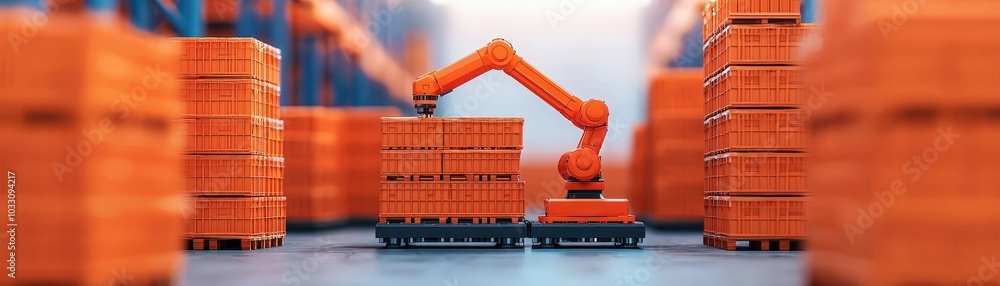
The future of commerce, manufacturing, and nearly every industry relies on speed, precision, and efficiency. This relentless pursuit is precisely why Automated Logistics & Warehouse Operations are no longer a futuristic concept but a vital necessity shaping today’s global supply chains. As businesses grapple with labor shortages, escalating customer demands, and the imperative for faster delivery, intelligent automation provides a powerful answer, transforming the way goods move from dock to door.
With an astonishing 80% of today's warehouses still relying on manual processes, the runway for transformation is immense. The global warehouse robotics market alone is projected to skyrocket from $7.93 billion in 2024 to $17.91 billion by 2029, a compound annual growth rate (CAGR) of 17.70%. This isn't just about robots; it's about smarter systems, better data, and a more resilient operational backbone.
At a Glance: What You'll Learn About Automated Logistics & Warehouse Operations
- Automation Defined: It's about minimizing human intervention in inventory movement using software, robotics, and sensors.
- Key Technologies: From self-navigating robots (AGVs, AMRs) to drone-powered inventory checks and AI-driven insights, the tools are diverse.
- Massive Benefits: Expect higher throughput, lower costs, improved accuracy, enhanced safety, and greater customer satisfaction.
- Overcoming Hurdles: Address upfront costs, integration challenges, and the need for specialized skills with strategic planning.
- When to Automate: Practical triggers and a clear 5-step roadmap for implementation.
- Future Trends: AI, cobots, edge computing, and sustainability are shaping the next generation of automated warehouses.
The Unstoppable March of Automated Logistics & Warehouse Operations
In an era defined by instant gratification and unpredictable global events, the traditional warehouse model is buckling under pressure. Labor shortages make it difficult to staff critical functions, while supply chain disruptions demand unprecedented agility. This confluence of factors has propelled Automated Logistics & Warehouse Operations from a niche consideration to a strategic imperative.
Automation allows companies to work smarter, not just harder. It tackles the repetitive, strenuous, and mundane tasks, freeing up human employees to focus on higher-value projects that require critical thinking and problem-solving. Imagine a workforce where machines handle the heavy lifting and endless scanning, while your team optimizes processes, innovates solutions, and builds stronger customer relationships. This isn't science fiction; it's the present reality in forward-thinking enterprises.
Moreover, the financial barriers to entry are becoming lower. Models like Robotics-as-a-Service (RaaS) allow businesses to leverage cutting-edge technology without the massive upfront capital investment, making automation accessible to a wider range of companies. By 2027, over a quarter of all warehouses are expected to have some form of automation, underscoring this rapid shift.
What Exactly Is Warehouse Automation?
At its core, warehouse automation is the strategic application of technology to streamline and optimize the movement of inventory into, within, and out of a storage facility, significantly reducing the need for human physical assistance and manual data handling.
This isn't merely about replacing people with machines; it's about augmenting human capability, eliminating labor-intensive duties, and eradicating the errors that often plague manual data entry and analysis. Automation can manifest in various forms:
- Digital Automation: This primarily involves software solutions, machine learning, and data analytics to optimize workflows, manage inventory, and direct operations. Think sophisticated Warehouse Management Systems (WMS) that orchestrate order picking, or AI that predicts demand.
- Physical Automation: This category encompasses tangible hardware like robotics, sensors, and other equipment that physically handle goods. From self-driving forklifts to robotic arms, these technologies execute tasks that once required significant human effort.
Often, the most powerful automation strategies combine both digital and physical elements, creating an intelligent ecosystem where software directs hardware, and data flows seamlessly between systems, driving unprecedented efficiency.
From Simple to Sophisticated: Understanding Automation Categories
Warehouse automation isn't a one-size-fits-all solution. It exists on a spectrum, evolving from basic mechanical aids to highly intelligent, integrated systems. Understanding these categories helps define the right fit for your operational needs:
1. Basic Automation
This foundational level employs simple, often mechanical technologies to reduce the physical burden of manual labor. It's about making existing processes easier and faster without complex digital integration.
- Examples: Manual conveyor belts, gravity-fed chutes, simple carousels for easy access, barcode scanners for basic data capture.
- Impact: Reduces strain, improves flow, but still relies heavily on human direction and physical interaction.
2. Warehouse System Automation
Stepping up in complexity, this category integrates software, machine learning, and data analytics to automate tasks and procedures. The focus is on intelligent process optimization rather than just physical assistance.
- Examples: Robust Warehouse Management Systems (WMS) that optimize order picking routes, inventory slotting, and labor assignments. Supply chain management software that provides real-time visibility.
- Impact: Significantly improves efficiency, accuracy, and decision-making through data-driven insights.
3. Mechanized Automation
Here, robotic equipment and systems come into play, working in tandem with humans to perform specific tasks. It's about leveraging machines for repetitive or strenuous physical work.
- Examples: Autonomous mobile shelf loaders that bring goods to pickers, robotic palletizers, AGVs (Automated Guided Vehicles) that follow fixed routes.
- Impact: Boosts productivity for specific physical tasks, reduces human effort, and enhances safety.
4. Advanced Automation
This is the pinnacle of warehouse automation, combining sophisticated mechanized robotics with intelligent automation systems, often powered by Artificial Intelligence (AI), cameras, and sensors. The goal is to replace labor-intensive human workflows with highly autonomous operations.
- Examples: Fleets of robotic forklifts that navigate dynamically, goods-to-person (GTP) systems, fully integrated Automated Storage and Retrieval Systems (AS/RS), and AI-driven picking robots.
- Impact: Offers the highest levels of efficiency, accuracy, and throughput, with minimal human intervention required for core processes.
The Power Tools: Key Technologies Driving Automated Operations
The rapid evolution of technology has spawned an impressive array of tools that form the backbone of modern automated warehouses. Each plays a critical role in enhancing efficiency, accuracy, and safety.
Autonomous Mobile Robots (AMRs)
Unlike their guided counterparts, AMRs operate independently, using onboard maps, sensors, and intelligent software to navigate flexible routes, detect and avoid obstacles, and manage inventory. They can dynamically reroute if necessary, making them highly adaptable. Amazon's Proteus is a prime example of a fully autonomous mobile robot in action, capable of navigating busy warehouse floors without human guidance.
Automated Guided Vehicles (AGVs) & Carts (AGCs)
These self-driving vehicles, often resembling forklifts or pallet movers, follow predefined paths—whether physical tracks, magnetic strips, or lines on the floor—using sensors or camera vision. They are excellent for repetitive, point-to-point transportation tasks in structured environments.
Articulated Robot Arms
These multi-jointed robotic arms are versatile workhorses, capable of lifting, sorting, and moving objects with precision. They are commonly deployed in receiving, picking, packing, and shipping areas to handle items quickly and consistently, reducing repetitive strain injuries for human workers.
Unmanned Aerial Vehicles (UAVs)/Drones
Drones equipped with RFID readers are revolutionizing inventory management. They can rapidly scan shelves, even at great heights, providing real-time inventory visibility and accuracy that far surpasses manual counts. This eliminates the need for forklifts in high-rack inventory checks, significantly reducing worker risk and speeding up the process.
Internet of Things (IoT)
IoT involves connecting various pieces of equipment, sensors, and even products into a cooperative digital network. This enables real-time data exchange, allowing for enhanced visibility across the operation, predictive maintenance alerts for equipment, and a more responsive supply chain overall.
Artificial Intelligence (AI)
AI is the brain behind many advanced automation systems. It assists with operational planning and workflow optimization, directing personnel for replenishment based on sales trends, current inventory levels, and predicted demand. AI-powered algorithms can also optimize picking paths, manage robotic fleets, and identify potential bottlenecks before they occur.
Goods-to-Person (GTP) Systems
This fulfillment method dramatically reduces picker travel time by bringing items directly to the workstation. Whether through conveyors, robotic shuttles, carousels, or vertical lift systems, GTP can often double or triple picking speeds, making it a game-changer for high-volume operations.
Automated Storage and Retrieval Systems (AS/RS)
A highly advanced form of GTP, AS/RS uses automated systems like robotic material-carrying vehicles and shuttles to store and retrieve materials with incredible density and speed. Ideal for high-volume, space-constrained warehouses, AS/RS maximizes storage capacity while minimizing retrieval times. IKEA’s highly automated distribution centers are a testament to the power of AS/RS.
Pick-to-Light and Put-to-Light Systems
These systems use mobile barcode scanners synchronized with digital light displays to guide pickers. When an item needs to be picked or put away, a light illuminates at the exact bin location, and a digital display shows the quantity. This dramatically reduces walking and searching time, while also minimizing human error.
Voice Picking and Tasking
Using speech recognition software and mobile headsets, voice picking systems direct workers along optimized pick paths. Workers receive instructions verbally and confirm tasks by speaking, keeping their hands and eyes free. This improves safety, accuracy, and efficiency by eliminating the need for handheld devices and allowing for non-stop forwarding of tasks.
Automated Sortation Systems
These systems use a combination of RFID, barcode scanners, and sensors to identify and divert items on conveyor systems. They are crucial for streamlining processes like receiving, picking, packing, and shipping, ensuring items reach their correct destinations quickly and accurately.
The ROI & Beyond: Unpacking the Benefits of Automation
Implementing automated logistics and warehouse operations isn't just about adopting new tech; it's about unlocking a cascade of tangible benefits that impact every facet of your business.
- Skyrocketing Efficiency & Throughput: Automation handles repetitive tasks with unmatched speed and consistency, significantly increasing the volume of goods processed and moved through your warehouse.
- Reduced Operational Costs: By delegating mundane tasks to machines, businesses can drastically cut labor costs, reduce material handling expenses, and optimize storage costs.
- Enhanced Data Accuracy & Analysis: Automated systems capture precise data at every step, minimizing human error in inventory counts, order fulfillment, and shipping. This rich data also fuels powerful analytics for continuous improvement.
- Minimized Errors & Loss: Automation slashes human error rates, leading to fewer shipping mistakes, reduced inventory loss, and ultimately, fewer stockouts.
- Improved Customer Satisfaction: Faster, more accurate order fulfillment translates directly into happier customers who receive their orders on time and without errors.
- Optimized Space Utilization: Technologies like AS/RS and intelligent slotting algorithms can dramatically increase storage density, allowing you to get more out of your existing warehouse footprint.
- Boosted Employee Satisfaction & Safety: Removing strenuous, repetitive, and potentially dangerous tasks from human workers improves job satisfaction and drastically enhances workplace safety. Employees can focus on more engaging, value-added roles.
- Resilience Against Labor Shortages: Automation provides a stable workforce that doesn't call in sick, ensuring operations continue smoothly even during peak seasons or when labor is scarce.
- Sustainability & Waste Reduction: Increased efficiency often leads to optimized routes, less energy consumption, reduced packaging waste, and a smaller overall carbon footprint for the business.
Navigating the Hurdles: Challenges to Consider Before Automating
While the benefits are compelling, embracing automation isn't without its challenges. A clear-eyed understanding of these potential pitfalls is crucial for strategic planning.
- High Upfront Costs: Implementing advanced automation often requires a significant capital investment in hardware, software, and specialized infrastructure. Calculating the ROI carefully is paramount.
- Complexity of Integration: Merging new automated systems with existing warehouse management, ERP, and other enterprise software can be a meticulous and complex process, demanding robust planning and technical expertise.
- Need for Specialized Skills: Operating, maintaining, and repairing sophisticated automation technologies requires a workforce with specialized technical skills. This may necessitate significant training or new hires.
- Risk of Technology Obsolescence: The pace of technological advancement is rapid. Automated systems, particularly software-dependent ones, can become outdated relatively quickly, requiring ongoing investment in upgrades.
- Potential for Disruption: The transition from manual to automated processes can initially impact productivity as staff adjust, systems are fine-tuned, and workflows are redefined.
- Dependence on Technology: Automated warehouses rely heavily on their equipment. Breakdowns can lead to significant downtime and costly maintenance, making robust preventative maintenance schedules essential.
- Workforce Displacement Concerns: Introducing automation can create anxiety among employees about job security. Managing this transition requires clear communication, reskilling programs, and redefining roles to focus on value-added tasks.
Where Automation Shines: Transforming Core Warehouse Processes
Automation isn't just a broad concept; it's a series of targeted solutions that enhance specific warehouse functions, making them faster, more accurate, and more efficient.
- Receiving: Manual receiving is slow and prone to errors. Automated systems, leveraging mobile devices and integrated software, allow for rapid data capture, quality checks, and verification upon arrival, accelerating goods into inventory.
- Returns: Automated sorting systems and conveyors streamline the returns process, quickly directing items for inspection, restocking, or disposal, reducing the time products spend in limbo.
- Putaway: Both physical and digital automation boost putaway efficiency and accuracy. Intelligent WMS systems determine optimal storage locations, while AMRs or AGVs physically transport items, supporting efficient cross-docking operations.
- Picking: This is often the most labor-intensive part of warehousing, with travel time consuming up to 50% of working hours. Goods-to-Person (GTP) systems and AMRs drastically reduce travel, bringing items directly to pickers for faster, more accurate order fulfillment.
- Sorting: Automated sortation systems, combined with AS/RS, improve accuracy and quality control by ensuring items are directed to the correct packing stations or shipping lanes.
- Replenishment: Automated tracking and cycle counting systems can monitor inventory levels in real-time, triggering automatic reorder requests for fast-moving items, preventing stockouts, and optimizing stock levels.
- Packaging: Algorithms can determine the optimal packaging for products based on attributes, dimensions, and material costs, minimizing waste and ensuring items are securely packed for transit.
- Shipping: Automated systems integrate conveyors, scales, sensors, printers, and software to determine the best carriers, estimate rates, and apply labels with precision, accelerating the dispatch process.
Real Stories: Automation in Action
Across industries, leading companies are demonstrating the transformative power of automated logistics.
- Amazon: A pioneer in warehouse automation, Amazon utilizes automated barcode scanning and vast fleets of mobile robots (like Proteus) to manage its enormous fulfillment centers, enabling its signature rapid delivery speeds.
- Nike: In its Japanese distribution centers, Nike implemented a sophisticated Goods-to-Person (GTP) picking system. This allowed them to offer same-day delivery, significantly enhancing customer service and market responsiveness.
- IKEA: Known for its innovative approach, IKEA employs highly automated distribution centers. Its IKEA Components facility in Slovakia, for example, is a fully automated warehouse featuring extensive AS/RS systems and towering stacker cranes, optimizing storage and retrieval for vast quantities of components.
- iAutomation: This company leveraged back-office automation with NetSuite, integrating barcoding and case management to streamline their internal logistics and data handling, demonstrating that automation isn't just for the warehouse floor.
- Fully Automated Warehouses: While not yet the norm, facilities like British Sugar, Blechwarenfabrik, and Symbotic operate with minimal human intervention, showcasing the potential for end-to-end automated operations.
Is It Time? When to Automate Your Warehouse Operations
Deciding when to automate is a strategic decision. Look for these key indicators that signal your business could greatly benefit from an automated overhaul:
- Customer order delays are frequent: Your current processes can't keep up with demand.
- Existing processes are highly labor-intensive and repetitive: Many tasks involve constant manual effort.
- Fulfillment capacity is declining or stagnant: You're hitting a ceiling on what you can process.
- Inventory counts are consistently inaccurate: You struggle with stockouts or excess inventory.
- You're relying on outdated legacy systems: Your technology is holding you back.
- Customer satisfaction data points to problems: Issues with delivery, accuracy, or speed are impacting your reputation.
- Your workforce fluctuates significantly with demand: You struggle to scale up or down efficiently.
- You need to significantly increase productivity or shipment volume: Growth demands a new approach.
- You want to optimize storage space: Your current layout is inefficient, or you're running out of room.
Automation is most effective in environments characterized by a high volume of repetitive tasks, standardized processes, clear scalability requirements, and a strong need for consistency and accuracy. If these describe your operation, it’s likely time to explore automation seriously.
Paving the Way: Essential Steps to a Successful Automation Journey
Embarking on a warehouse automation project requires careful planning and execution. Follow these five critical steps to ensure a smooth and successful transition:
1. Create an Implementation Committee
Assemble a diverse team comprising internal stakeholders from operations, IT, finance, and human resources. Crucially, also engage third-party automation experts. This committee will oversee the project, ensuring all perspectives are considered and potential roadblocks are addressed proactively.
2. Collect Critical Data
Before you automate, you must understand your current state. Evaluate your existing data collection infrastructure. What data are you collecting? How accurate is it? Assign clear ownership for data migration and ensure all relevant operational metrics are captured to establish a baseline for measuring success.
3. Evaluate and Refine Inventory Controls
Automation hinges on precise inventory management. Refine your Standard Operating Procedures (SOPs) for inventory receiving, storage, and retrieval. Define Key Performance Indicators (KPIs) to track inventory accuracy and efficiency. Assess your current accounting methods to ensure they align with automated tracking.
4. Implement a Robust Warehouse Management System (WMS)
A WMS is the brain of an automated warehouse. Choose a system that can integrate seamlessly with your existing enterprise software (like ERP), supports mobile devices for flexibility, and offers the advanced functionalities needed to orchestrate your new automated processes.
5. Determine the Right Type of Automation
Based on your business goals, customer demand, and the data collected in previous steps, identify the specific automation solutions that will yield the greatest impact. This could range from digital data streamlining with enhanced software to introducing advanced physical robots for picking and transport. Align your technology choices directly with your strategic objectives.
Mastering the Game: Best Practices for Automated Warehousing
Beyond the initial implementation, sustaining a high-performing automated warehouse requires ongoing commitment to best practices.
- Integrate Systems with a Central WMS: Your Warehouse Management System should be the central nervous system, providing comprehensive inventory control, labor tracking, reporting, and orchestrating all automated and manual processes.
- Invest in Scalable Solutions: Choose automation technologies that can grow and adapt with your business. Avoid proprietary systems that lock you into one vendor or limit future expansion.
- Prioritize Automated Data Collection: Accurate data is gold. Implement cloud-based solutions with mobile barcode scanners and other sensors to automate data capture from the moment goods arrive, providing real-time insights.
- Perform Continuous Cycle Counts: Leverage automated data collection to conduct frequent cycle counts, identifying and correcting inventory discrepancies swiftly, rather than relying on annual, disruptive physical inventories.
- Optimize Receiving Processes: Ensure maximum data is collected upfront during receiving. This vital first step directs downstream workflows and prevents errors from propagating through the entire operation.
- Evaluate and Rework Warehouse Design: Physical automation technologies often require specific layouts. Be prepared to re-evaluate and potentially rework your warehouse design to optimize material flow, robot pathways, and storage density for maximum efficiency.
Looking Ahead: Key Trends Shaping Automated Logistics in 2025 and Beyond
The landscape of Automated Logistics & Warehouse Operations is dynamic, with exciting innovations continually emerging. Here’s a glimpse at what's shaping the future:
- AI and Machine Learning Deep Dive: AI's role is expanding beyond basic optimization. Expect even deeper integration into WMS for predictive demand forecasting, ultra-optimized picking algorithms, and dynamic inventory slotting that adapts in real-time.
- Robotics Revolution Continues: The mobile robots market is projected to more than triple, from $4.5 billion in 2023 to over $14 billion by 2027. We’ll see more versatile, intelligent, and affordable robots.
- The Rise of Cobotics: Collaborative robots (cobots) are designed to work safely alongside humans, enhancing productivity without requiring extensive safety cages. AMRs that intelligently avoid collisions are a prime example.
- Edge Computing: Processing data closer to its source, rather than sending it to a central cloud, will reduce response times for autonomous systems and enhance the precision of inventory tracking, critical for high-speed operations.
- Supply Chain as a Service (SCaaS): A growing market for flexible, subscription-based automated warehouse solutions, making advanced automation more accessible to businesses of all sizes, much like RaaS.
- Blockchain Technology: Offering secure, transparent, and immutable records for supply chain transactions, blockchain will enhance traceability, combat counterfeiting, and build greater trust across networks.
- Intelligent Warehouse Drones: Fleets of drones will conduct real-time inventory management, perform continuous cycle counting, and even carry out visual inspections of infrastructure, providing unprecedented visibility.
- The "Amazon Effect" on Fast Shipping: The relentless demand for same-day, one-day, and two-day delivery continues to drive the adoption of automation for hyper-efficient order fulfillment.
- Automated Warehouse Cleaning: Specialized mobile cleaning robots are emerging to handle sanitization and disinfection, contributing to safer and more hygienic warehouse environments.
- Expanding Autonomous Vehicles: Beyond forklifts, autonomous vehicles will increasingly handle the transportation of inventory between different warehouse locations and even for last-mile delivery.
- Deeper ERP Integrations: Advanced APIs and Machine Learning will enable seamless, end-to-end automated business platforms, connecting warehouse operations with broader financial, sales, and planning systems.
- Big Data Analytics: Cloud-based applications and databases will continue to drive advanced analytics, transforming raw operational data into actionable insights for continuous improvement.
- Ubiquitous IoT: RFID sensors and other IoT devices will further enhance real-time inventory tracking, providing granular visibility and richer data collection points throughout the warehouse.
- Wireless Fleet Management: IoT, cloud, and sensor technology will provide comprehensive management of automated vehicle fleets, offering real-time location tracking, predictive maintenance alerts, and operational insights.
- Voice Picking Optimization: Expect continued improvements in voice picking technology, further enhancing worker efficiency, safety, and accuracy by enabling hands-free, eyes-free operation.
- Predictive Maintenance: Smart sensors combined with AI will anticipate equipment failures before they occur, triggering maintenance alerts to minimize costly downtime (which can exceed $100,000 per hour).
- Sustainability Focus: Automated warehouses can significantly reduce energy usage, minimize waste, and lower their carbon footprint through optimized processes and more efficient resource allocation.
Show Me the Money: Understanding Automation Costs and ROI
The sticker price for a full warehouse automation overhaul can run into the millions of dollars, making a clear understanding of costs and return on investment (ROI) absolutely essential.
To calculate your potential ROI, follow these steps:
- Determine Initial Investment: Account for all costs, including software licenses, hardware (robots, conveyors, AS/RS), implementation services, system integration, and staff training.
- Estimate Annual Savings & Benefits: Quantify savings from reduced labor costs, fewer errors, increased productivity, optimized warehouse space, and improved inventory accuracy.
- Calculate Annual Net Benefit: Subtract the annual operating costs (maintenance, software subscriptions, energy) from your total estimated annual savings and benefits.
- Annual Net Benefit = Total Annual Savings – Annual Operating Costs
- Calculate ROI: Divide the annual net benefit by the initial investment cost and multiply by 100 to get a percentage.
- ROI = (Annual Net Benefit / Initial Investment Cost) x 100
Example: If an initial investment is $2,000,000 and the annual net benefit (savings minus operating costs) is $400,000, your ROI would be 20% ( ($400,000 / $2,000,000) x 100 ).
Remember, ROI isn't a one-time calculation. Ongoing assessment is crucial as factors like labor costs, technology prices, and market demand can fluctuate, impacting your true return over time.
Your Automation Questions Answered
We've covered a lot of ground, but here are quick answers to some frequently asked questions about automated warehouses:
- What is an automated warehouse? It's a facility that uses technology like robotics, Automated Storage and Retrieval Systems (AS/RS), conveyors, and advanced software to perform tasks related to inventory movement with minimal human intervention.
- What are the three main levels of warehouse automation?
- Basic: Simple technologies like barcode scanners and manual conveyors that reduce physical labor.
- System: Integrates software (WMS), AS/RS, and pick-to-light systems to optimize processes.
- Advanced: Leverages robotics (AMRs, robotic arms), Goods-to-Person (GTP) systems, and AI for highly autonomous operations with minimal human input.
- What percentage of warehouses are automated? While most warehouses (around 80%) are still primarily manual, over a quarter of all warehouses are expected to have implemented some form of automation by 2027.
- Are there fully automated warehouses? Yes, fully automated warehouses exist, though they are not yet the industry norm. Examples include facilities operated by IKEA Components (Slovakia), British Sugar, Blechwarenfabrik, and Symbotic, which demonstrate near-complete operational autonomy.
Embracing the Automated Future
The journey toward automated logistics and warehouse operations is not just about adopting new technology; it's about reimagining your entire supply chain. It's about building resilience, boosting efficiency, delighting customers, and empowering your workforce to achieve more.
By strategically implementing automation, you can transform your operations from a cost center into a competitive advantage, ready to meet the demands of tomorrow's market. The opportunity is immense, and the tools are at your disposal. The question isn't if you'll automate, but when and how effectively.